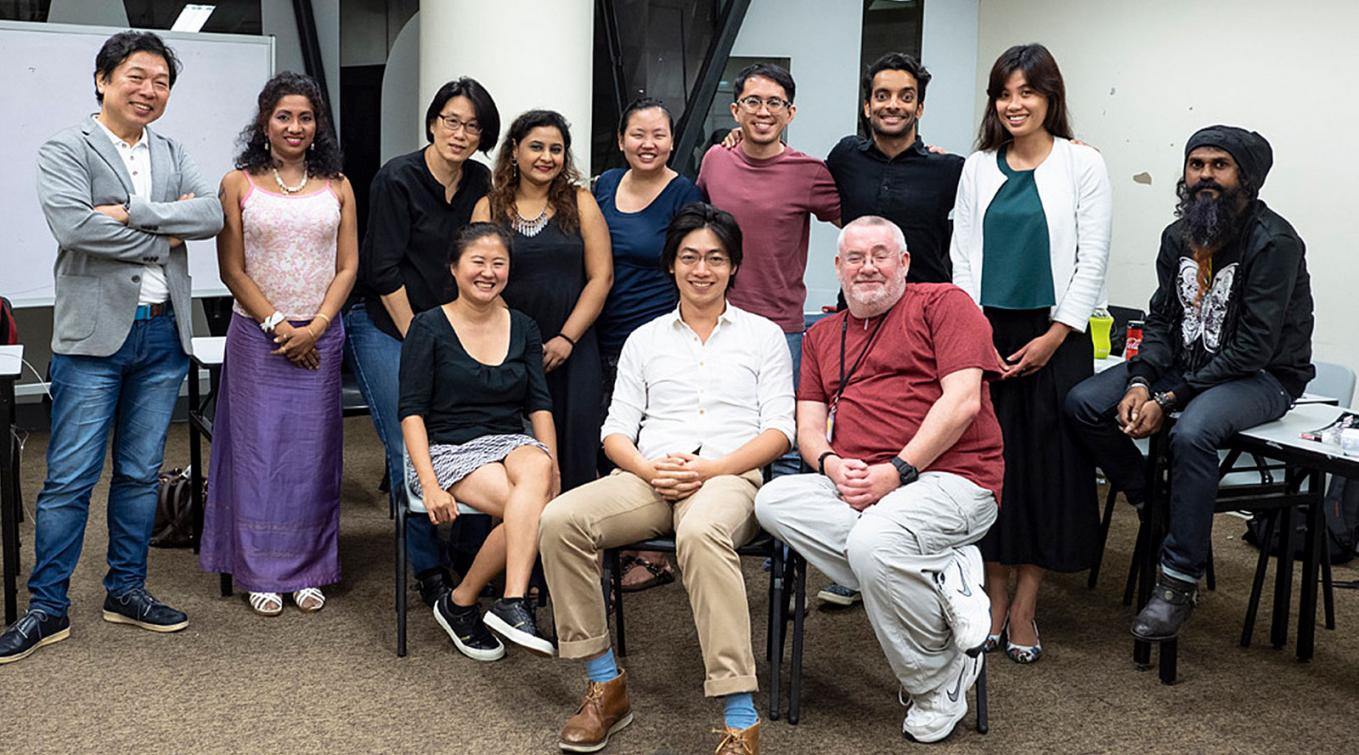
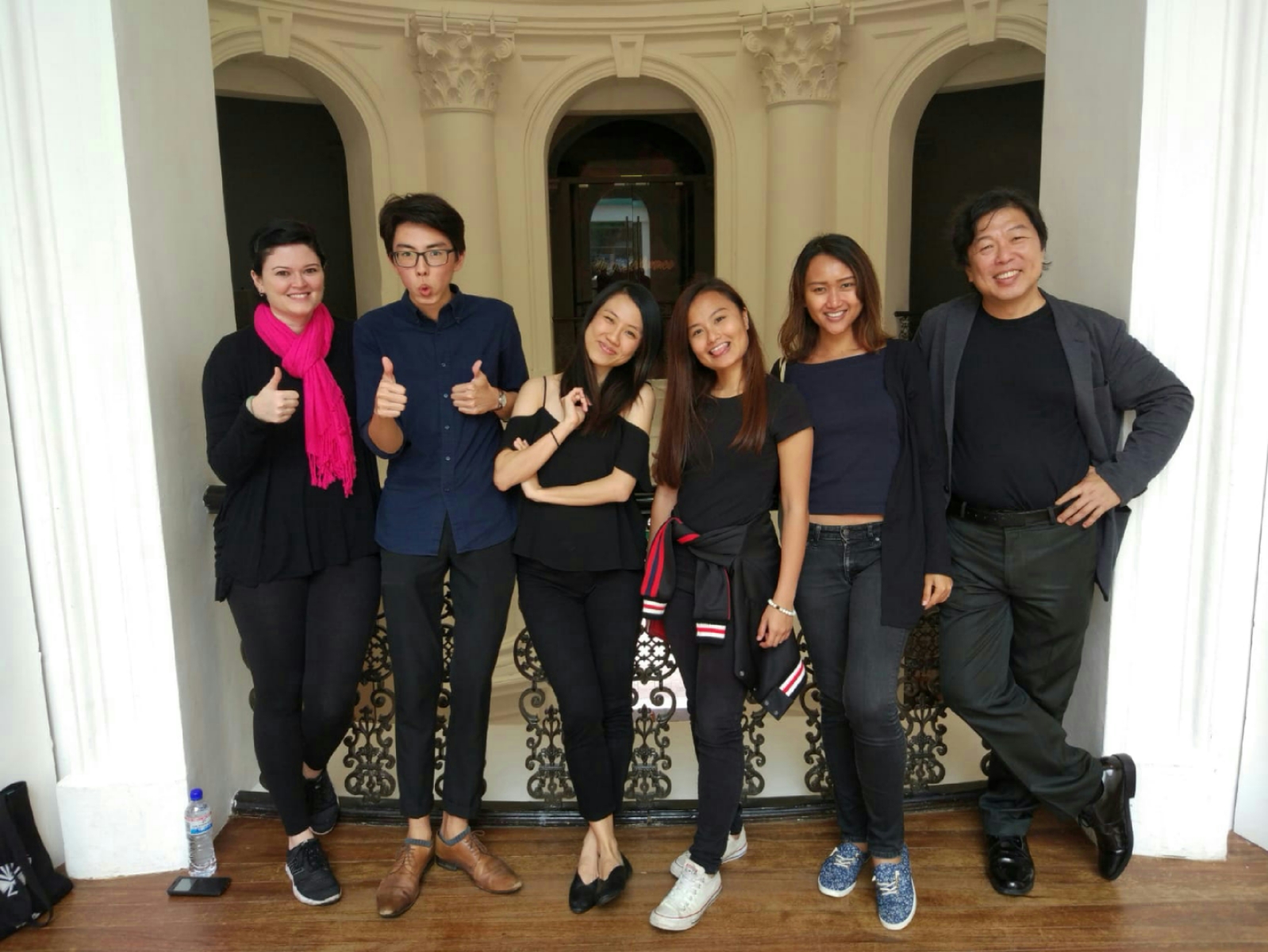
"Bon Voyage" was mostly shot in Dakota Crescent and Redhill Close, two old estates that are (sadly) earmarked for demolition for urban renewal this year.
I grew up in Redhill Close and so this estate is very close to my heart. It was built in 1955 under the Singapore Improvement Trust (SIT), a housing scheme under the pre-independence Lim Yew Hock Government. It was commonly known as "chit lau chu" or 'seven story houses' in Hokkien or Teochew.
The estate was accessible by a closed-loop ring road from Tiong Bahru Road and was only served by the Hock Lee Bus Company's Number 8 Service for a while. That went on until a new road Jalan Bukit Merah was constructed and appropriately called 'Xin Lor' (新路/'new road') in Hokkien, by the locals. Bus Service number 8 plied from Redhill Close to North Canal Road, near Raffles Place.
I grew up in Redhill Close and so this estate is very close to my heart. It was built in 1955 under the Singapore Improvement Trust (SIT), a housing scheme under the pre-independence Lim Yew Hock Government. It was commonly known as "chit lau chu" or 'seven story houses' in Hokkien or Teochew.
The estate was accessible by a closed-loop ring road from Tiong Bahru Road and was only served by the Hock Lee Bus Company's Number 8 Service for a while. That went on until a new road Jalan Bukit Merah was constructed and appropriately called 'Xin Lor' (新路/'new road') in Hokkien, by the locals. Bus Service number 8 plied from Redhill Close to North Canal Road, near Raffles Place.

When the flats were built, there were shanty attap hut dwellings scattered in its surroundings. Most of the dwellers were pig farmers and other forms of subsistence farmers. Those who couldn't live off the ground, or get a job, sold cooked food in public places, which was illegal without a food catering licence.
Among the hawkers that stood out was the fish ball noodle stall because they had errand boys going around the estate hitting at a longitudinally cut bamboo stick making a rhythmic "kok-kik-kok" sound to solicit for more business.
They would take orders and deliver the noodles to their customers without delivery charges. Some customers living in the upper floors of the apartment blocks would lower down their rattan basket tied to a rope to receive their bowls of noodles to save the boys climbing up several floors.
Each bowl of noodles costs about 20 cents and the boy's wages was probably one Straits Settlement Dollar a day, about ten Singapore Dollars today.
These illegal hawkers, as they were called, were constantly on the run away from the Ministry of Environment enforcement officers.
These officers were called 'teh gu' (地牛) in Hokkien, roughly meaning 'territorial bulls' when translated. When they catch the illegal hawkers, they would literally smash their stalls up into bits. Those were heartbreaking moments to bear, as we witnessed the hawkers' back breaking hard work for days or even months, demolished right before their eyes.
Yet the next day, the hawkers would be out selling their wares again. People got to eat and families needed to be fed. Life had to go on. People those days were tough and persistent. Only the fittest survived.
However from the Government's point of view, they felt they had to be cruel to be kind, for the greater good of preserving public health and food safety. Most of these hawkers were eventually offered licence to sell their stuff in centralised food centres, now called 'hawker centres'.

The farmers would let their pigs roam around in the estate, where they (the pigs) would eat whatever scraps of food they can find and also conveniently crap anywhere they like. As kids, we had to watch out for those random heaps of shit in the playground and grass patches. When we played badminton, we had to be careful not to land the shuttlecock on any of those nasty heaps. Out of sheer pragmatism and practice, we got more precise with where we wanted our shuttlecocks to land.
The pigs and humans mostly co-existed in the same space peacefully. That is, with the exception of some boys daring each other to go to any roaming pig and land a quick punch on them and run. And they did that every now and then. The pig would scream out loud and run. It was the boys' idea of having fun. Kids could be cruel with animals, but please forgive them for they did not know.
The stray dogs had it easier. They were all loved by the kids, especially the puppies. The dogs would learn commands and tricks like sitting down, rolling down and shaking hands very quickly. They also got fed little treats, like biscuits or pieces of bone. But the good times didn't last very long, as the authorities would send men with rifles to shoot them and cull their population. Very cruel practice indeed.
Cats somehow got away. Cats always do.
There were also goats herded by ethnic Indians in the neighbourhood. They would bring their goats out in the morning to graze at some grassland and then bring them back at sunset. In between, they would sell goat milk to the residents.

My family moved from a squalid single shop house room at Clarke Quay, along the Singapore River (now a hip clubbing arena), to a two-bedroom apartment in Redhill. We were a first occupant of the then brand new flat. Then, the lifts frequently broke down as the kids from the neighbouring attap houses would come over to take joy rides. High rise dwellings and lifts were curiosities to these people.
There are 21 blocks of two-bedroom flats in Redhill Close, numbered from 1 to 22, skipping the number 4, because '4' sounds like 'death' in Cantonese. The rent was $52 a month for many years, until they were sold back to the tenants in 1982.
Most of the flats were lived in by ten or more people. Usually father, mother, eight kids and a grandma, all squeezed into about 600 square feet of floor. At night, every square feet of the floor were slept on and there were double deck or triple deck bunk beds to pack more in. Family members that had to use the toilet in the middle of the night had to be careful not to trample on their siblings.
Despite such cramped conditions, it was common for families to take in additional member(s), usually a Malaysian relative working in Singapore. Kinship was very strong. Together they will endure and tolerate to help a relative get ahead economically.
Most families had only one breadwinner. The mum would have to be a housewife to take care of the kids and the household.
The fathers, those that were not illegal hawkers or professional gangsters mostly held blue-collar jobs like taxi drivers, carpenters, construction workers, vegetable sellers, fishmongers...etc.
A very small number of them had a few years of formal education. Those that spoke English were held in high regard and had comfortable desk jobs like bookkeepers, calligraphers, bank clerks,...etc. Those who completed their Senior Cambridge School Certificate (equivalent of 10 years in school) were prized possessions and were hired by British companies. These were the privileged ones, with the exception of those who had the untimely misfortune of working for the British Army, as they were retrenched in 1968 when the British troops withdrew from Singapore. Then, finding another desk job was hard.
There was an exceptional one in my block, an interesting man who folded beautiful paper flowers and would finish his huge bouquet at 5pm every day. He would then take Bus Number 8 to deliver them to his client at North Canal Road.
Wages were not high and families lived from hand to mouth and paycheck to paycheck. In the days when parents did not spare the rod and spoil the child, even kids hardened by physical pains were petrified whenever they were threatened to have dinner taken away from them. These kids had experienced hunger and they knew that having no dinner would deal them the ultimate pain.
Then, if you were a kid with three square meals a day, you were considered rich; and if you had less, you were considered poor. There were many who were poor. I have seen some going over to their neighbours to borrow rice.
When money ran out, they borrowed. The more entrepreneurial ones converted their living room into Chinese temple shrines to collect donations from worshippers; others converted their flat into gambling dens; and yet others sub-let one of their bed rooms, packing the kids further into whatever space they could find. There was a married man and father of eight kids, who married a rich older woman and had a baby with her. There seemed to be an 'understanding' between the man and his two wives. In return, the second wife contributed financially to his family coffers.
Some became tontine leaders that managed pools of subscriber contributed cash, but ran away with the money when the going got tough. Such cash was meant to serve as micro-loans to deserving members in times of need.
Yet some others became illegal lottery bookies. They operated within a trusted network and sometimes communicated to their members via coded languages scribbled like random graffiti on common walls. They made good money until the day when luck was stacked against them and they had too many winners to pay, but not enough money to do so. And so they had to vanish. This was a blessing in disguise for those that vanished, as those that continued soon got arrested and thrown in jail. It was only to be expected that it would be a matter of time before the police would too learn the coded language and wrote the bookies fate on the walls.
Some women worked as washerwomen, manually washing other people's laundry, as there were no domestic washing machines those days. Others worked as seamstresses at home, so that they can continue to run the household and look after their children.
The more desperate ones became bar girls, dance hostesses or prostitutes. These women of easy virtues would often end up having their daughters follow their footsteps when they got too old and their daughters got old enough.
When all else failed, the desperate ones stole. When caught, they were first beaten up before being put into jail, thus throwing their family into deeper jeopardy. Others would become gangsters, helping their bosses run prostitute dens and illegal casinos, extort protection money, intimidate the weak, fight their enemies, or kill their opponents.
It was only a few years later in the late 1960s that there were more jobs, as Singapore's industrialisation plan began to trickle down to the masses. Then it was possible to get a job as a menial factory worker fixing transistors for US$1 a day, which translated to SG$3 a day. A bowl of noodles costs 30cents, so adjusted for inflation, it would be about SG$30 a day in today's money. It was still not much money, but it paid the bills.
These factory workers would negotiate for free uniforms, so that they could save some money. Every cent counted. To make themselves a little different while donning the uniform, they would modify it a little bit here and there for some identity.
Some female factory workers, particularly the Malay ones, would cut their uniforms very short and tight to exhibit their well endowed body and attract men. After a hard day's work of repetitive tedium, getting attention from the opposite sex helped to make their day a little more meaningful. Canteen, common corridors and bus stops were their staging grounds.
These sexy girls were so game into having a good time that they would respond to wolf whistles from construction workers in passing Datsun pickup trucks - much to the whistlers' delight.
Left alone, it is human nature that men and women will find their ways of dancing the mating game. This manifested as a bit of titillation here and a bit of flirtation there. Somehow, they would find gaps and opportunities amid their hard lives for some relief. And so they worked hard and played hard.
And that is why all parents wanted their children to study hard and do well in school, and not have to go through the physical hardship and financial uncertainties like those sea of nameless faces toiling in factories.
"Study hard and get a job that holds the pen, not one of rough (hard) labour," was the maxim.
Most of the flats were lived in by ten or more people. Usually father, mother, eight kids and a grandma, all squeezed into about 600 square feet of floor. At night, every square feet of the floor were slept on and there were double deck or triple deck bunk beds to pack more in. Family members that had to use the toilet in the middle of the night had to be careful not to trample on their siblings.
Despite such cramped conditions, it was common for families to take in additional member(s), usually a Malaysian relative working in Singapore. Kinship was very strong. Together they will endure and tolerate to help a relative get ahead economically.
Most families had only one breadwinner. The mum would have to be a housewife to take care of the kids and the household.
The fathers, those that were not illegal hawkers or professional gangsters mostly held blue-collar jobs like taxi drivers, carpenters, construction workers, vegetable sellers, fishmongers...etc.
A very small number of them had a few years of formal education. Those that spoke English were held in high regard and had comfortable desk jobs like bookkeepers, calligraphers, bank clerks,...etc. Those who completed their Senior Cambridge School Certificate (equivalent of 10 years in school) were prized possessions and were hired by British companies. These were the privileged ones, with the exception of those who had the untimely misfortune of working for the British Army, as they were retrenched in 1968 when the British troops withdrew from Singapore. Then, finding another desk job was hard.
There was an exceptional one in my block, an interesting man who folded beautiful paper flowers and would finish his huge bouquet at 5pm every day. He would then take Bus Number 8 to deliver them to his client at North Canal Road.
Wages were not high and families lived from hand to mouth and paycheck to paycheck. In the days when parents did not spare the rod and spoil the child, even kids hardened by physical pains were petrified whenever they were threatened to have dinner taken away from them. These kids had experienced hunger and they knew that having no dinner would deal them the ultimate pain.
Then, if you were a kid with three square meals a day, you were considered rich; and if you had less, you were considered poor. There were many who were poor. I have seen some going over to their neighbours to borrow rice.
When money ran out, they borrowed. The more entrepreneurial ones converted their living room into Chinese temple shrines to collect donations from worshippers; others converted their flat into gambling dens; and yet others sub-let one of their bed rooms, packing the kids further into whatever space they could find. There was a married man and father of eight kids, who married a rich older woman and had a baby with her. There seemed to be an 'understanding' between the man and his two wives. In return, the second wife contributed financially to his family coffers.
Some became tontine leaders that managed pools of subscriber contributed cash, but ran away with the money when the going got tough. Such cash was meant to serve as micro-loans to deserving members in times of need.
Yet some others became illegal lottery bookies. They operated within a trusted network and sometimes communicated to their members via coded languages scribbled like random graffiti on common walls. They made good money until the day when luck was stacked against them and they had too many winners to pay, but not enough money to do so. And so they had to vanish. This was a blessing in disguise for those that vanished, as those that continued soon got arrested and thrown in jail. It was only to be expected that it would be a matter of time before the police would too learn the coded language and wrote the bookies fate on the walls.
Some women worked as washerwomen, manually washing other people's laundry, as there were no domestic washing machines those days. Others worked as seamstresses at home, so that they can continue to run the household and look after their children.
The more desperate ones became bar girls, dance hostesses or prostitutes. These women of easy virtues would often end up having their daughters follow their footsteps when they got too old and their daughters got old enough.
When all else failed, the desperate ones stole. When caught, they were first beaten up before being put into jail, thus throwing their family into deeper jeopardy. Others would become gangsters, helping their bosses run prostitute dens and illegal casinos, extort protection money, intimidate the weak, fight their enemies, or kill their opponents.
It was only a few years later in the late 1960s that there were more jobs, as Singapore's industrialisation plan began to trickle down to the masses. Then it was possible to get a job as a menial factory worker fixing transistors for US$1 a day, which translated to SG$3 a day. A bowl of noodles costs 30cents, so adjusted for inflation, it would be about SG$30 a day in today's money. It was still not much money, but it paid the bills.
These factory workers would negotiate for free uniforms, so that they could save some money. Every cent counted. To make themselves a little different while donning the uniform, they would modify it a little bit here and there for some identity.
Some female factory workers, particularly the Malay ones, would cut their uniforms very short and tight to exhibit their well endowed body and attract men. After a hard day's work of repetitive tedium, getting attention from the opposite sex helped to make their day a little more meaningful. Canteen, common corridors and bus stops were their staging grounds.
These sexy girls were so game into having a good time that they would respond to wolf whistles from construction workers in passing Datsun pickup trucks - much to the whistlers' delight.
Left alone, it is human nature that men and women will find their ways of dancing the mating game. This manifested as a bit of titillation here and a bit of flirtation there. Somehow, they would find gaps and opportunities amid their hard lives for some relief. And so they worked hard and played hard.
And that is why all parents wanted their children to study hard and do well in school, and not have to go through the physical hardship and financial uncertainties like those sea of nameless faces toiling in factories.
"Study hard and get a job that holds the pen, not one of rough (hard) labour," was the maxim.

Yes, there was indeed a little hill that was literally red in colour at the fringes of the estate, we called 'Au Buay Sua' in Hokkien, that translates to 'the hill behind' in English. There were also two Chinese Folk Religion temples at the top, where many Chinese people worshipped in. Besides prayers, the mediums would occasionally go into trance to find answers to the worshippers' problems. During festivals, there were Hokkien or Teochew wayangs staged along the slope of the little red hill, attracting large crowds of audiences, along with hawkers, mini gambling den operators and other peddlers grabbing the chance to earn a few extra bucks.
Most people spoke Hokkien, Teochew or Cantonese; including some Malays and Indians who could speak them fluently. Conversely, many of the older Chinese folks could speak Malay fluently. Malay was an important common language those days. It is still the National Language of Singapore today, though many people can't speak it.

The surrounding of Redhill Close was a random sprawl of shanty attap huts, separated by narrow winding mud tracks. At night, much of the kampong was not lighted. Some of the huts didn't even have electricity and fresh running water, and so relied on kerosene lamps and wells. Sanitation was simply served by huts with a hole in the ground. Some units did not even have land or dwelling registration.
Inevitably, these shanty kampongs were breeding grounds and hideouts for the triads, who would carry out their initiation ceremonies almost uninhibited in the forested areas. Gangsters pursued by the police would run into the kampongs and the police would not dare to venture into those slums in the dead of the night in pitch darkness. So there, the triads festered.
Once at a pasar malam (night market) along Jalan Bukit Merah, a young man snatched my mother's gold chain and jade pendant from her neck and ran, while she bent down to look at some stuff. My mother gave chase and my sister barely 11 years old, grabbed me on a piggy back and ran with my mother. But we were not fast enough. It was quite a trauma for me as a five year old. The snatch thief ran and disappeared into the attap house cluster in the dead of the night. There was little we could do. A family friend suggested that we search the nearby grass patch, and that on the off chance, he might had the more valuable jade pendant carelessly slipped off the chain. We did that search and by sheer luck to our delight, found the pendant.
This incident was reported in the evening newspapers. The second time my mother was in the newspapers was later in 1964, when she was about to deliver my younger brother when there was a curfew outside in the aftermath of a racial riot. Luckily, she was picked up by a passing police patrol car that took her to the hospital.
By the early 1970s, pasar malams were banned, not for the incidents of snatch thievery, but for the bigger danger that they had become staging grounds for gang clashes. The night market crowd was used as a cover for gang members to form up before the battle without being noticed. Then on their leader's calls, they would charge their opponents with parangs (machetes), mangrove scaffold poles and metal pipes. Light bulbs filled with sulphuric acid became acid bombs and were hurled into the air at their opponents. It was a theatre of horror.
These gangs from 18 Sio Kun Tong, 24 Ang Koon and their spinoffs, were often into fights for territories. The government eventually clamped down hard on them with the infamous Section 55 of the Penal Code, that gives the police arbitrary powers to arrest and detain secret society members indefinitely without trial.
New public places that were built were to be gangster proof. For instance, hawker centre tables and chairs were fixed to the ground, so that they could not be used as weapons during a fight; and more places were brightly lit up.
As a kid, I have seen quite a few fights, gang clashes and riot squads in action. If you were a kid that used to roam around a lot, chances were that you would have gotten into some petty fights just to protect yourself or your friend. Kids toughened up and became streetwise very quickly those days.
In the day, the kampongs were the natural playground for kids. Boys would go there to catch spiders and fishes.
The boys would catch a certain specie of spider that will fight whenever they see another one of them. This specie was found in the bushes near the railway tracks. It was remote there and so the smaller boys would have to be vigilant and vanish into the bushes whenever they saw bigger boys approaching from a distance. Often these bigger boys will rob the smaller boys or beat them up. It was the law of the jungle. Singapore was far from the safety levels we have today. Those were the days when everybody would turn into a bully given half a chance. This was extended to politicians, policemen, teachers, nurses, bus conductors,....etc.
To get to the water stream, the boys would need to skirt around a shanty hut built at the edge of the stream. They would have to squeeze through a very narrow path between the house and the water, wide enough only for tiny feet to cross. Inside, there lived a mad woman who would rush out with her long messy hair and full grin whenever she noticed kids passing by. Rumours had it that she had a baby that passed away, and soon after, she turned mad.

The boys would fish at the upstream of the water where it was clean and clear. They would catch those beautiful guppies with rainbow coloured tails.

As it flowed downstream, the water got murky very quickly by the toilet hut discharges that went directly into the water. However, it was at the downstream that the bigger fishes were found, particularly the big black catfish. As they say, you can't catch many fish in clear waters. Catfish were considered a longkang fish (fish from the drains) those days. These days, it is an expensive delicacy.
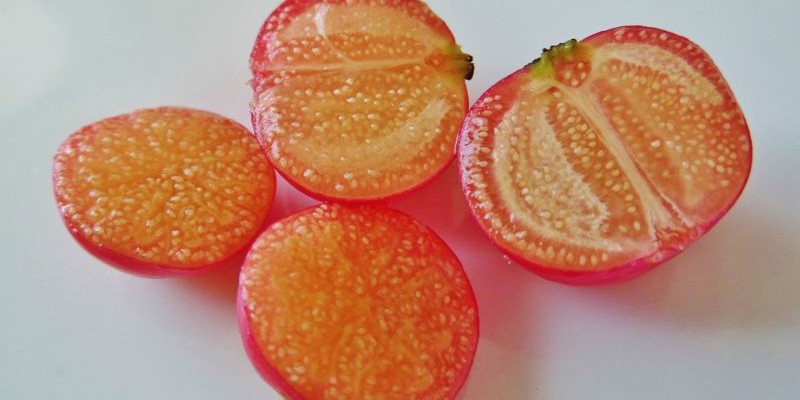
 There was also this local cherry tree that the boys loved. The cherries are edible and the tree was colloquially called the ba-cherry tree. I just found out from the Internet that its scientific name is Muntingia Calabura, aka Jamaica Cherry or Singapore Cherry.

But the boys didn't love it because the cherries tasted good, but more so because they could use them as ammunition for their guns made from pieces of waste wood and rubber bands. They would target at passing school boys and have their white shirts splattered spectacularly cherry red, driving the victims into a rage and the shooters running for their life.
With no money in our pockets, we invented our own toys. We turned clothe pegs, bottle caps, abandoned wheels (probably from prams), drink straws, old copper coins, ice cream sticks, rubber bands, cardboard boxes, wish-bone pieces of wood, rubber tree seeds, Acacia tree fruit, papaya tree stalks,...etc, into toys.
We would slide down grass slopes with cardboard boxes, climb on staircase railings, climb scaffoldings, climb trees, jump from the second storey, explore abandoned bunkers, crawl through drain tunnels,...etc. We survived all that!
Inevitably, these shanty kampongs were breeding grounds and hideouts for the triads, who would carry out their initiation ceremonies almost uninhibited in the forested areas. Gangsters pursued by the police would run into the kampongs and the police would not dare to venture into those slums in the dead of the night in pitch darkness. So there, the triads festered.
Once at a pasar malam (night market) along Jalan Bukit Merah, a young man snatched my mother's gold chain and jade pendant from her neck and ran, while she bent down to look at some stuff. My mother gave chase and my sister barely 11 years old, grabbed me on a piggy back and ran with my mother. But we were not fast enough. It was quite a trauma for me as a five year old. The snatch thief ran and disappeared into the attap house cluster in the dead of the night. There was little we could do. A family friend suggested that we search the nearby grass patch, and that on the off chance, he might had the more valuable jade pendant carelessly slipped off the chain. We did that search and by sheer luck to our delight, found the pendant.
This incident was reported in the evening newspapers. The second time my mother was in the newspapers was later in 1964, when she was about to deliver my younger brother when there was a curfew outside in the aftermath of a racial riot. Luckily, she was picked up by a passing police patrol car that took her to the hospital.
By the early 1970s, pasar malams were banned, not for the incidents of snatch thievery, but for the bigger danger that they had become staging grounds for gang clashes. The night market crowd was used as a cover for gang members to form up before the battle without being noticed. Then on their leader's calls, they would charge their opponents with parangs (machetes), mangrove scaffold poles and metal pipes. Light bulbs filled with sulphuric acid became acid bombs and were hurled into the air at their opponents. It was a theatre of horror.
These gangs from 18 Sio Kun Tong, 24 Ang Koon and their spinoffs, were often into fights for territories. The government eventually clamped down hard on them with the infamous Section 55 of the Penal Code, that gives the police arbitrary powers to arrest and detain secret society members indefinitely without trial.
New public places that were built were to be gangster proof. For instance, hawker centre tables and chairs were fixed to the ground, so that they could not be used as weapons during a fight; and more places were brightly lit up.
As a kid, I have seen quite a few fights, gang clashes and riot squads in action. If you were a kid that used to roam around a lot, chances were that you would have gotten into some petty fights just to protect yourself or your friend. Kids toughened up and became streetwise very quickly those days.
 |
| By courtesy of SPH Archives. |
The boys would catch a certain specie of spider that will fight whenever they see another one of them. This specie was found in the bushes near the railway tracks. It was remote there and so the smaller boys would have to be vigilant and vanish into the bushes whenever they saw bigger boys approaching from a distance. Often these bigger boys will rob the smaller boys or beat them up. It was the law of the jungle. Singapore was far from the safety levels we have today. Those were the days when everybody would turn into a bully given half a chance. This was extended to politicians, policemen, teachers, nurses, bus conductors,....etc.
To get to the water stream, the boys would need to skirt around a shanty hut built at the edge of the stream. They would have to squeeze through a very narrow path between the house and the water, wide enough only for tiny feet to cross. Inside, there lived a mad woman who would rush out with her long messy hair and full grin whenever she noticed kids passing by. Rumours had it that she had a baby that passed away, and soon after, she turned mad.
The boys would fish at the upstream of the water where it was clean and clear. They would catch those beautiful guppies with rainbow coloured tails.
As it flowed downstream, the water got murky very quickly by the toilet hut discharges that went directly into the water. However, it was at the downstream that the bigger fishes were found, particularly the big black catfish. As they say, you can't catch many fish in clear waters. Catfish were considered a longkang fish (fish from the drains) those days. These days, it is an expensive delicacy.


But the boys didn't love it because the cherries tasted good, but more so because they could use them as ammunition for their guns made from pieces of waste wood and rubber bands. They would target at passing school boys and have their white shirts splattered spectacularly cherry red, driving the victims into a rage and the shooters running for their life.
With no money in our pockets, we invented our own toys. We turned clothe pegs, bottle caps, abandoned wheels (probably from prams), drink straws, old copper coins, ice cream sticks, rubber bands, cardboard boxes, wish-bone pieces of wood, rubber tree seeds, Acacia tree fruit, papaya tree stalks,...etc, into toys.
We would slide down grass slopes with cardboard boxes, climb on staircase railings, climb scaffoldings, climb trees, jump from the second storey, explore abandoned bunkers, crawl through drain tunnels,...etc. We survived all that!
Boys will be boys. We didn't know what the girls did for fun. They were probably doing their homework and playing five-stones at home. They didn't matter to us. We probably thought they were boring. Kids look at the world as one humanity. It was only years later that we divided the world into two halves and got selfishly interested in only one-half of humanity. LOL.
It is sad that all these antics are mostly lost among the kids today. Nowadays, they have virtually merged themselves into their mobile phones and computer games. They have become one with the machine, but not with nature. They do not know how much they have missed and have bypassed the chance of growing up inventing their own games, imagining their own stories and exploring new and dangerous places.
 |
| The open areas are so empty and prestine, Back those days, there would be kids playing ball games, playing catching, flying kites,...etc. |
Redhill Close for all its good, bad and ugly, warts and all, was a closely knitted community where everyone knew everyone. It was where gossips and news took no time to get around. Neighbours would visit each other anytime. Often, those without TV would go over to those apartments with TVs to enjoy the evening's programme. Those that lived along common corridors and had televisions in the living room would leave their windows open, so that neighbours could stand by the corridor and enjoy the evening's programme.
Mothers would often leave their kids to their neighbour's care for an hour or two, while they made their trips to the wet market; and they would return that goodwill when asked upon.
Kids mature very quickly those days, as they were assigned family duties very early in their life. By the age of 16 years old, he or she would have gone through thick and thin with the family and had helped their parents bring up seven other younger siblings, taken care of a grandma and laboured the drudgery of housework. His younger siblings say of age 14 years old or below, would in-turn be in-charged and responsible for the well-being and safety of those even younger. So there was a strict hierarchy in the family, where the older is responsible for the younger ones. The younger ones got taken care of and did not have many duties, but they must obey their elders.
Kids that grew out of such communities learned to be self-reliant, tough and empathetic to the needs of others. And so when they were older, they would partake in protests and strikes against bus fare hikes, price rises or unfair dismissals. Though, these were compounded by the fuel of anti-Imperialist and socialist movements.
At 16 years old, some boys would become sailors earning about $1,000 a month, a princely sum at that time, considering that an accountancy graduate in 1968 earned $400 a month. Others joined the army and got trained and toughened up very quickly by Israeli war veterans.
That was life around 50 years ago. Most residents were living under the poverty line by today's standards. Yet, we were rich in human spirit and mostly happy. I saw more smiles then, than I do now in Singapore as a progressive modern metropolis. The oldest man I knew was never lonely and the ugliest woman got married and had many kids.
My mother had six kids when she was 30 years old. Nowadays, many girls 30 years old or older, have no kids, nor are they married. And yet some others in this age range are still on their cutesy narcissistic online poses with aspirations to be social network personalities. Are there not more important things in life than such egocentrism in disguise, that at best, serves the insatiable cycles of consumerism?
Some people say that times have changed and that "policemen those days wore shorts". But I still feel that somethings will always be the same. Love have remained the great constant over centuries of history. Love never changed. With the onslaught of media influences and peer pressures, we ought to ask, "What would Love do in a given situation?" This is a time tested guiding light. I am not saying what is right or what is wrong. I am illustrating the choices and consequences.
Mothers would often leave their kids to their neighbour's care for an hour or two, while they made their trips to the wet market; and they would return that goodwill when asked upon.
Kids mature very quickly those days, as they were assigned family duties very early in their life. By the age of 16 years old, he or she would have gone through thick and thin with the family and had helped their parents bring up seven other younger siblings, taken care of a grandma and laboured the drudgery of housework. His younger siblings say of age 14 years old or below, would in-turn be in-charged and responsible for the well-being and safety of those even younger. So there was a strict hierarchy in the family, where the older is responsible for the younger ones. The younger ones got taken care of and did not have many duties, but they must obey their elders.
Kids that grew out of such communities learned to be self-reliant, tough and empathetic to the needs of others. And so when they were older, they would partake in protests and strikes against bus fare hikes, price rises or unfair dismissals. Though, these were compounded by the fuel of anti-Imperialist and socialist movements.
At 16 years old, some boys would become sailors earning about $1,000 a month, a princely sum at that time, considering that an accountancy graduate in 1968 earned $400 a month. Others joined the army and got trained and toughened up very quickly by Israeli war veterans.
That was life around 50 years ago. Most residents were living under the poverty line by today's standards. Yet, we were rich in human spirit and mostly happy. I saw more smiles then, than I do now in Singapore as a progressive modern metropolis. The oldest man I knew was never lonely and the ugliest woman got married and had many kids.
My mother had six kids when she was 30 years old. Nowadays, many girls 30 years old or older, have no kids, nor are they married. And yet some others in this age range are still on their cutesy narcissistic online poses with aspirations to be social network personalities. Are there not more important things in life than such egocentrism in disguise, that at best, serves the insatiable cycles of consumerism?
Some people say that times have changed and that "policemen those days wore shorts". But I still feel that somethings will always be the same. Love have remained the great constant over centuries of history. Love never changed. With the onslaught of media influences and peer pressures, we ought to ask, "What would Love do in a given situation?" This is a time tested guiding light. I am not saying what is right or what is wrong. I am illustrating the choices and consequences.
Thereafter around 1969, the attap houses were demolished to build Housing Development Board (HDB) flats to accommodate people resettled from the Silat Road and Kampong Bahru areas, due to the extension of Jalan Bukit Merah (road). Several years later, the little red hill, where the estate got its name from, was flattened to build what is now Bukit Merah Central. (Bukit Merah means "Redhill" in Malay.)
This year, the estate itself is due for urban renewal. It will be demolished and replaced by closely packed tall modern blocks, with multi-storey car parks identical to many other uniformly looking estates in Singapore. The existing residents will have the option to move to replacement flats built nearby around Henderson Road. For more details, click here.
Singapore has made huge economic strides,by any standards. This is because there was a leadership that cared and a population that trusted their leaders and had worked hard. I can't say that it is the same today. With progress, comes comfort, risk aversion and self-centreness. Many people have forgotten how it was like to be really poor. The younger ones have never experienced it. Leaders pay lip-service to it, fall into group-think and are petrified to lose their million dollar jobs. Bureaucrats across the ranks, hired for their brilliant minds, second guess their political bosses and window dress numbers to look good and maintain status quo.
Those with alternative views remain silent to keep their jobs and their above market salaries. They now fear their true self. The true self that is crying to get out to live truthfully.
A particular minister had once complained that her family will suffer if there were a pay cut to her million dollar salary, oblivious that millions of people in Singapore earn a fraction of what she does and probably thousands others struggle day-to-day to make ends meet. Yet another minister labeled people earning $500,000 a year or less as 'mediocre', implying that the prime factor in measuring a good human being is in his earnings - his money. I won't bore you further with the gory details and turn this into a political post!
Clearly, we have entered the age of decadence.
Still, I heard that a prominent politician hails from Redhill and so I wish that this son of Redhill will bring back the spirit we once all had and pull us out of this new slum of moral decay.

This short film "Bon Voyage" parallels the lives of families who have had lived in Redhill Close and have upgraded to live in newer estates with better creature comforts, but (arguably) in looser communities and weaker spiritual bonding. "Bon Voyage" is about change and transitions in life, and that in life, we grow attached to the old and are sad to see them replaced by the new. However, anything new will eventually become something old that we will feel for, resonate with and embrace; thus perpetuating the cycle.
Now, watch the film:
Some of the footages didn't turn out that well as there were too much reflections against the front screen of the car, thus obscuring the actors. Those footages could not be in the final cut and we had to reshoot them. So, there were some shoot days that stretched into the late hours of the night. My last scenes were past 11 pm and I was really tired. So the tiredness you saw was real! LoL
This is the second production I have worked together with the director Chong YunLun from Butterworks. The previous one was an army short film called "Dao Sha Pia", which won the Best National Education Presentation in the director's camp and was also quite popular online.
This is the second production I have worked together with the director Chong YunLun from Butterworks. The previous one was an army short film called "Dao Sha Pia", which won the Best National Education Presentation in the director's camp and was also quite popular online.

There are other productions I have acted in that features places in Singapore that is 'no longer there'. Such as this one called "The Collector", which was shot in Sungei Road 'Thieves' Market, in Singapore.

To watch The Collector, click here.
This one, "More than Words that Touches", is shot in Pulau Ubin. The villages are still the way they were when we shot the film there in 2016. Let's hope the Government keeps it that way.

To watch "More Than Words that Touches", click here.
"Penghulu" was also shot in Pulau Ubin.

To watch "Penghulu", click here.
This one "Ward 4A" is shot in an old fashion school building, along Parry Avenue at Upper Serangoon area, Singapore, reminiscent of schools the 1960s.
 To watch "Ward 4A", click here.
SUBSCRIBE TO THIS BLOG!!!
And be entertained and inspired by our behind-the-scenes, funny stories, discoveries, videos and other freebies.